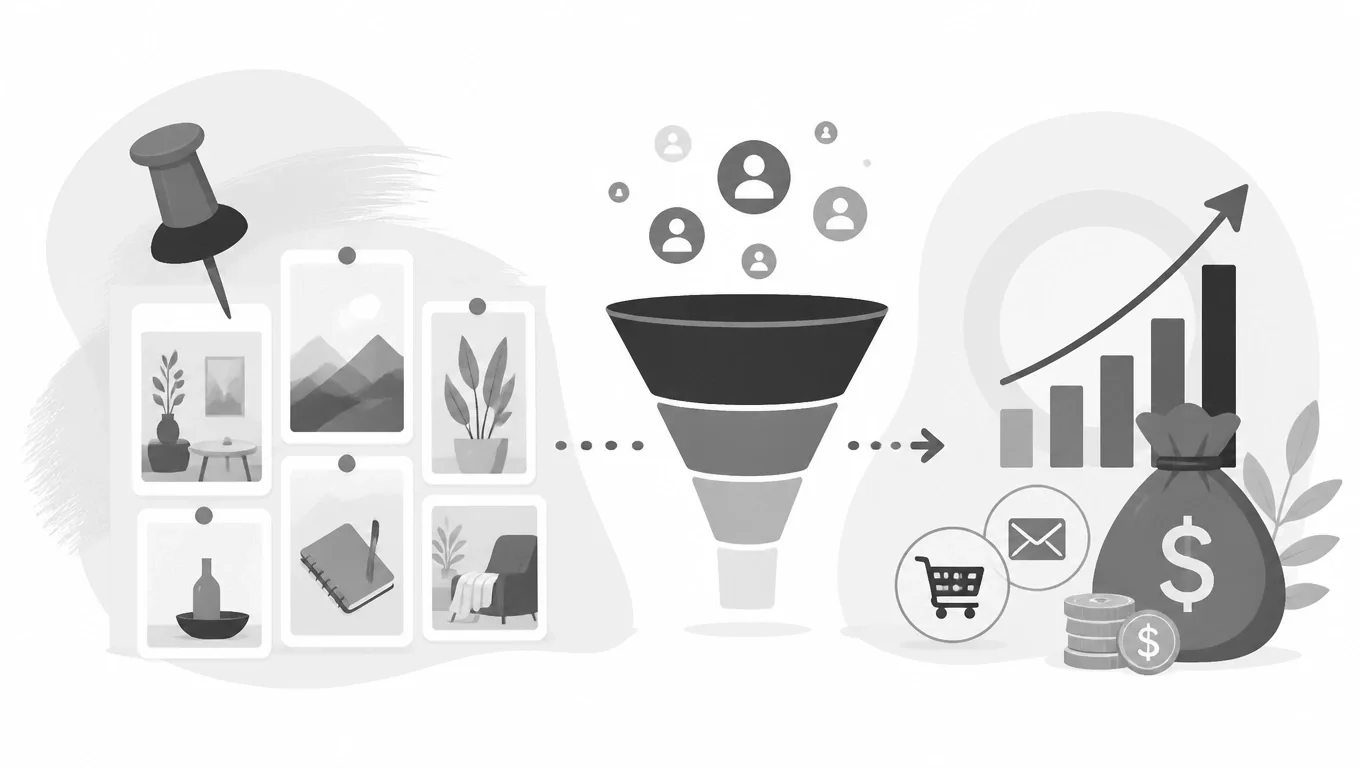
Pinterest is often misunderstood as a simple digital mood board for recipes and DIY projects, but in reality, it is a powerful visual search engine and a “conversion machine” for businesses[1]. Unlike traditional social media platforms where content has a lifespan of mere hours, Pinterest content is evergreen, acting as long-term assets that can drive consistent traffic and leads for months or even years[2]. To succeed, you must shift your mindset from chasing “likes” to building a data-backed strategy that guides high-intent users through a strategic sales funnel[1].
Understanding the Pinterest Sales Funnel
A high-performing Pinterest funnel is designed to move a user from initial discovery to a final purchase or sign-up[3][4]. Because Pinterest users are typically planners with high purchase intent, they are often in the early research phase of their buying journey, making them ideal targets for lead generation[5].
- Top of Funnel (TOFU): Discovery At this stage, users discover your content through their home feed or search results[6]. The goal is to capture attention using Fresh Pins—brand-new images or videos that Pinterest’s algorithm prioritizes for distribution[7]. These Pins should solve a specific problem or provide inspiration through keyword-rich titles and bright, vertical visuals with a 2:3 aspect ratio[8].
- Middle of Funnel (MOFU): Consideration Once users are interested, they begin saving your Pins to their own boards, visiting your profile, and clicking through to learn more[6]. This is where board organization and profile optimization are critical[6][9]. Your boards should be organized into niche-specific “topic clusters” that reflect your expertise and use clear, searchable names rather than clever ones[10].
- Bottom of Funnel (BOFU): Conversion At the bottom of the funnel, users are ready to take action, such as visiting your website to make a purchase or signing up for a newsletter[11]. Pins at this stage require strong, action-oriented calls-to-action (CTAs) like “Shop now” or “Get the template” to seal the deal[12].
Strategies for Lead Generation
Pinterest is an exceptionally effective tool for growing email lists and booking clients[13][14]. To generate leads, every Pin must lead to an intentional destination, such as a landing page with an opt-in form[15][16].
- Leverage Rich Pins: These dynamic Pins automatically sync metadata from your website, providing extra context like article headlines or real-time product pricing and stock availability[17]. Article Rich Pins are particularly valuable for bloggers and service providers, as they display the headline and description directly on the Pin, increasing trust and click-through rates, which can be further enhanced by mastering your titles and descriptions[18].
- Use Problem-Solving Listicles: Users love actionable content that they can implement immediately[19]. Creating Pins for “How-To” guides or listicles that validate a user’s struggle and offer clear solutions builds immediate authority and encourages clicks to your lead magnet, especially when you master the art of designing Pinterest pins that convert[19].
- Target High-Intent Keywords: Effective lead generation starts with robust keyword research[20]. By using tools like the Pinterest search bar’s autocomplete or dedicated keyword research tools, you can uncover “long-tail” phrases that reflect specific user intent, such as “meal prep for beginners on a budget”[20].
Maximizing Sales and Scaling Your Funnel
For e-commerce brands, Pinterest offers a direct path to revenue through Product Catalogs[21][22]. By connecting your Shopify, Etsy, or WooCommerce store, you can transform your inventory into shoppable Product Pins that appear in search results and dedicated shopping sections[23].
To scale your efforts without burning out, automation tools are essential[24][25]. Platforms like Pin Generator can automate the creation of hundreds of unique, on-brand Pin variations from a single product URL, allowing you to A/B test different visuals and headlines to see what drives the most conversions[26]. Consistent posting is key; the algorithm rewards accounts that publish fresh content daily[27].
Measuring Success: Metrics That Matter
To turn “data into dollars,” you must look past vanity metrics like follower count and focus on Key Performance Indicators (KPIs) that impact your bottom line[28][29].
- Outbound Clicks: This is the “gold standard” for lead gen and sales, as it measures the number of people who actually leave Pinterest to land on your website[30][31].
- Saves: High save rates indicate that your content resonates and has future purchasing potential, which is crucial for creating engaging pins for high conversion rates[32][33].
- Conversion Rate: This tracks whether Pinterest visitors are taking the desired action once they reach your site[34].
By treating Pinterest as a long-term traffic engine and strategically mapping your content to the user’s journey, you can transform a simple profile into a repeatable system for growth and revenue[35].



References
- 12 Best Pinterest Analytics Tools for Growth in 2025 [28]
- 8 Amazon Pinterest Marketing Tips to Boost Sales in 2025 [32, 35]
- Creating a Pinterest Pin That Drives Traffic [2, 27]
- Effective Pinterest Marketing Strategies to Boost Sales [20, 29]
- How Do I Sell on Pinterest? Tips to Turn Pins into Profits [17, 21, 23, 26]
- How To Improve SEO on Pinterest: Your Complete Success Guide [10, 24]
- How to Advertise Your Blog on Pinterest: A Beginner’s Guide [18]
- How to Create Pins That Rank: Pinterest SEO for Your Pin Designs [8]
- How to Sell on Pinterest: Real Strategies That Drive Sales [5, 22, 25]
- Pinterest Analytics 101: Tips and Tools to Track Your Success [30, 33]
- Pinterest Business Strategy 2025 – How to Choose a Niche, Make Money, and Stay Consistent [13, 14, 16]
- Pinterest Funnel Strategy: How Pins Guide Users to Action [1, 3, 4, 6, 7, 9, 11, 12, 34]
- Pinterest Marketing: The Complete 2025 Guide [15]
- Pinterest for Bloggers: Drive More Traffic with Pins [19]
- Pinterest for Blogs A Guide to Real Traffic Growth [31]