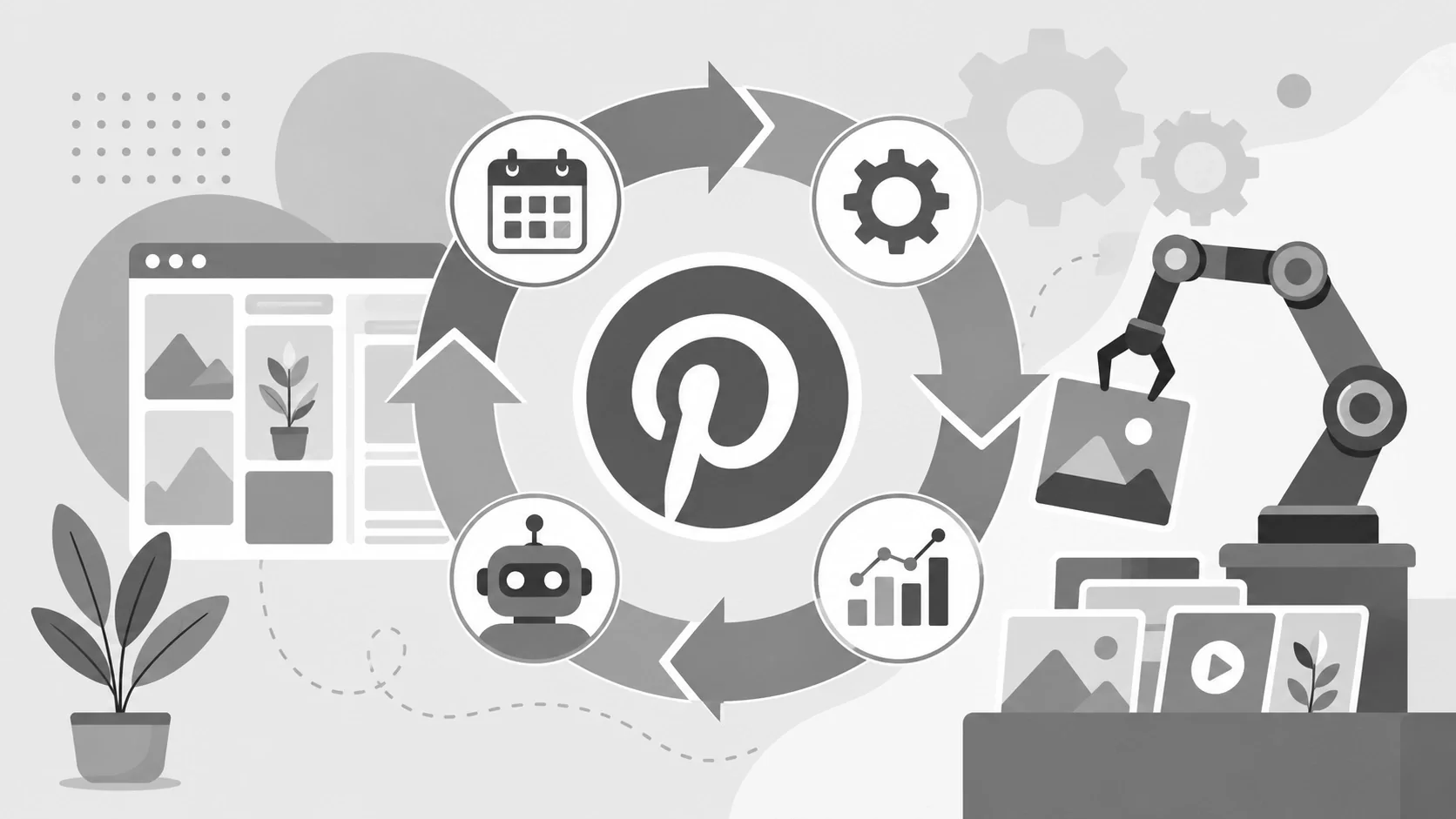
In 2026, Pinterest has solidified its role not just as a social network, but as a powerful visual search engine where users arrive with high purchase intent[1]. However, for small business owners and creators, the manual effort required to stay competitive can feel like a full-time job[2][3]. Automation tools are the key to transforming this chaotic process into a strategic, “always-on” engine that drives sustainable growth[4][5].
Why Automation is Non-Negotiable for Growth
Pinterest thrives on consistency, and the platform’s algorithm heavily favors accounts that maintain steady publishing patterns[6]. Manually pinning every day is exhausting and often leads to inconsistent bursts of activity, which can stall your momentum[7][8].
Automation tools solve this by allowing you to batch your work. Instead of being glued to your screen, you can dedicate one focused session per week to plan and schedule weeks of content[9]. This “assembly line” approach not only saves time—potentially reducing marketing costs by over $2,000 a month in labor—but also ensures your content reaches users when they are most active[7].
Smart Features That Move the Needle
Modern automation tools go far beyond simple post-dating. To dominate the Pinterest landscape in 2025, look for these essential features:
- Smart Scheduling: Generic “best time to post” advice is outdated because every audience is different[10]. Advanced tools like Tailwind’s SmartSchedule analyze your specific audience data to recommend personalized posting windows[11].
- Fresh Pin Creation: Pinterest now prioritizes “Fresh Pins” (original content) over “Saves” (re-pinning existing content)[12]. Automation tools like SmartPin can automatically generate unique, keyword-rich variations of your Pins every week from a single URL, ensuring you always have new content for the algorithm[13].
- Bulk Scheduling: Because Pinterest recommends posting 5 to 15 fresh Pins per day to maximize your chances of going viral, manual entry is no longer feasible[14]. Bulk uploaders allow you to schedule hundreds of Pins at once[15][16].
- Interval Pinning: This feature intelligently spaces out the same Pin across multiple relevant boards over days or weeks, preventing you from appearing “spammy” while maximizing reach[17].
Strategic Content Optimization
Automation acts as a spotlight; it exposes weak strategy fast[18]. To ensure your automated engine performs, you must focus on Pinterest SEO. This means incorporating target keywords into your Pin titles, descriptions, and alt text[19]. Research shows that Pins with optimized alt text can earn 123% more outbound clicks[20][21].
Furthermore, automation is vital for seasonal planning. Pinterest users are planners who search for holiday content 45 to 60 days in advance[19]. A scheduler allows you to load seasonal “seeds” months early, ensuring your content has time to gain momentum before peak search periods[19].
Choosing the Right Tool for Your Strategy
While several platforms offer Pinterest support, they vary in depth:
- Tailwind: Often considered the “undisputed champion” for Pinterest, it offers deep integration and specialized features like SmartLoop for recycling evergreen content and Ghostwriter AI for generating keyword-rich captions[22].
- Hootsuite: An ideal “Swiss army knife” for those managing multiple social networks (Instagram, TikTok, LinkedIn) from a single dashboard[23].
- Later and Planoly: Strong choices for visual-first brands that prioritize aesthetic planning and manage Instagram alongside Pinterest[24][25].
The Bottom Line
Successful Pinterest marketing in 2026 is a numbers game where quality beats quantity, but consistency is the entry fee[26]. By implementing an automation system, you move away from “playing Pinterest roulette” and toward a data-driven strategy that works for you 24/7[5][27]. Whether you are a blogger looking for long-tail traffic or an e-commerce brand driving sales, automation allows you to scale your reach without burning out[28].